The Logic
of Connectivity.
Trust in graph analytics is a byproduct of mathematical transparency. We dismantle the "black box" approach to quantitative research, replacing it with a rigorous framework of verifiable node-link integrity and edge-weighting protocols.
Core Quant Foundations
Every visualization produced by FluxGraphPath is anchored in discrete mathematics. We do not prioritize aesthetic symmetry; we prioritize the accurate representation of multi-dimensional vector space.
Algebraic Connectivity & Spectral Clustering
We utilize the Fiedler vector to determine graph partitions. This ensures that clusters identified within your data are not coincidental associations, but significant structural properties of the graph Laplacian.
Centrality Measure Normalization
Standard degree centrality often misrepresents influence in sparse networks. Our methodology employs Eigenvector and Betweenness centrality calculations that adjust for network density variations automatically.
Temporal Graph Persistence
Data evolves. Our system tracks edge persistence over time, allowing analysts to distinguish between transient noise and structural shifts in the relational landscape.
Data Integrity Protocols
Raw data is often fragmented. Our bridge-building algorithms identify missing links using probabilistic inference while maintaining a strict distinction between observed data and modeled predictions.
Ingestion & Scrubbing
Removal of duplicate edges and self-loops that artificially inflate centrality. We enforce schema-strict validation for every node attribute before it enters the processing pool.
Heuristic Balancing
Application of force-directed placement constraints. Unlike standard layout engines, our "Quant Lab" setting prioritizes edge-length accuracy over visual overlap prevention.
Anomaly Flagging
Identification of "islands" and outliers that fall outside the three-sigma distribution of the network's average geodesic distance. High-value insights often hide here.
Beyond Heuristics.
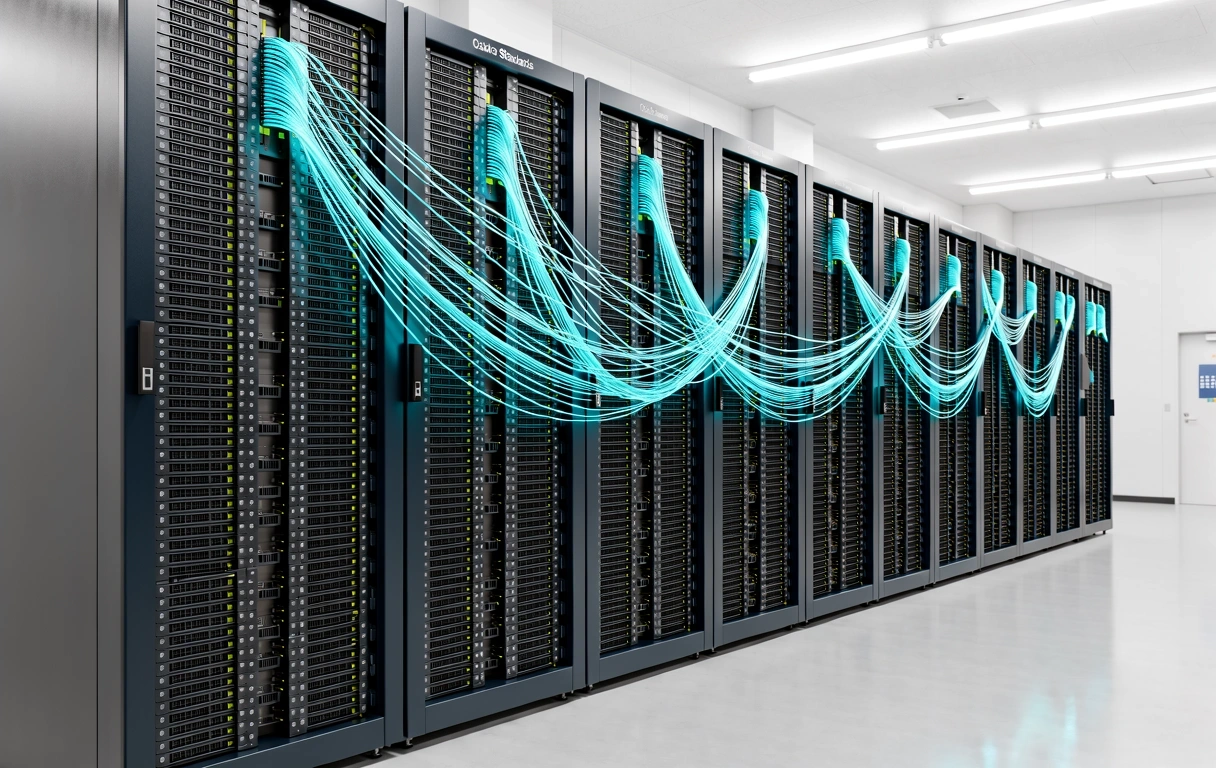
Professional graph analytics requires more than just connecting dots. It requires a commitment to the "Osaka Standards"—a set of internal benchmarks we developed to ensure that every visualization reflects the underlying mathematical truth of the dataset.
Verification Hierarchy
Deterministic Data Ingestion
Every entry point is hashed and timestamped. We maintain a full audit trail of nodal transformations to prevent data drift during high-frequency updates.
Multivariate Correlation Checks
Cross-referencing graph properties against secondary statistical models to ensure consistency. If our graph says "influence" and our linear regression says "random," we investigate.
Expert Human oversight
Algorithms solve for scale, but humans solve for nuance. Our senior analysts review automated graph summaries to catch outliers that mathematical models might categorize as noise.
Research
Transparency.
We don't ask for blind faith in our visualizations. We provide the complete mathematical roadmap for every project, ensuring your team of analysts can replicate and verify our findings.
Inquire About Standards